5 Reasons You Quit Smoking and Still Can't Catch Your Breath (And the Muscle Nobody Rebuilds)
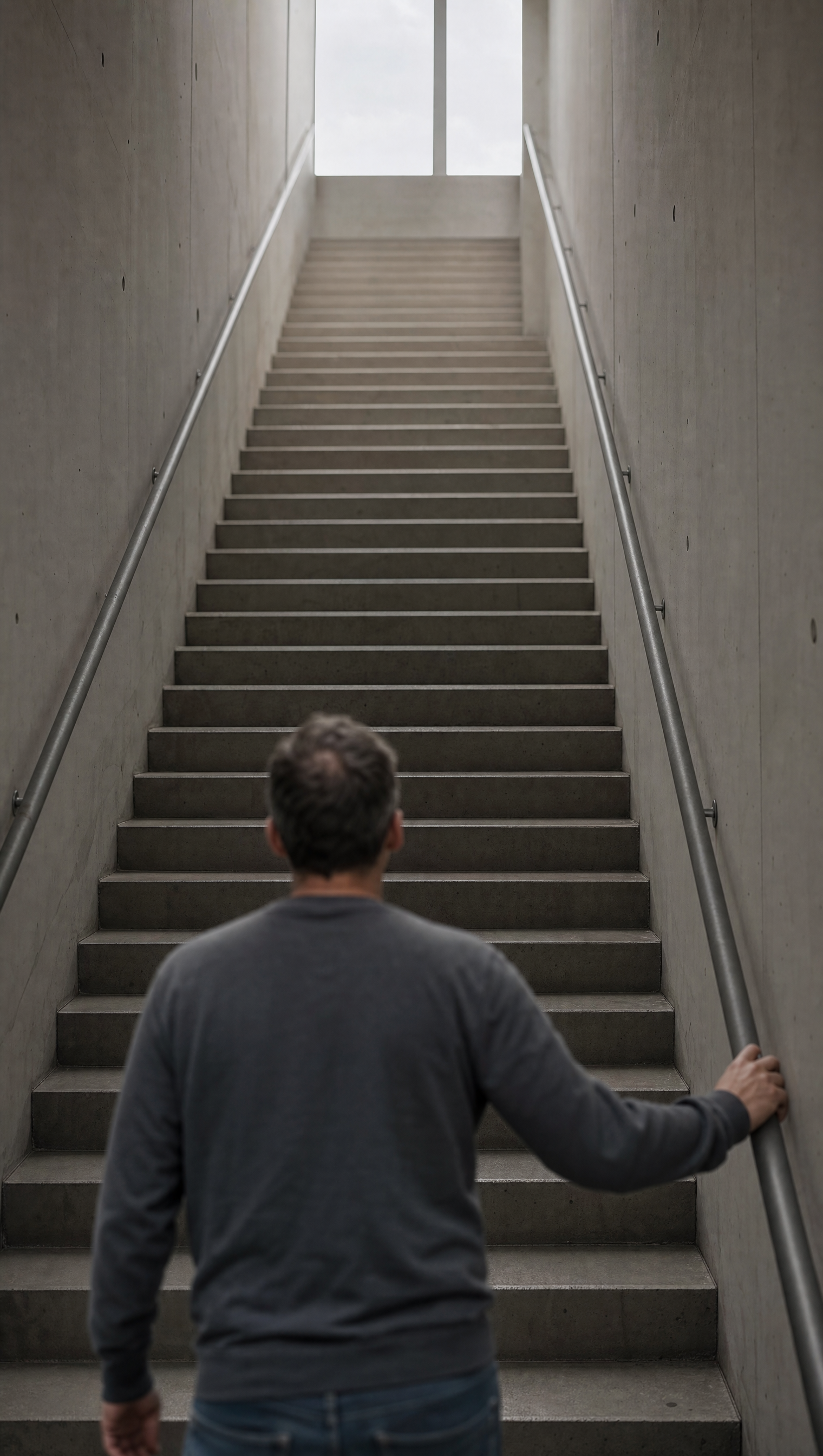
"I quit two years ago. Everyone stopped asking about it after the first month. Nobody warned me that one flight of stairs would still be a decision I had to make."
1
Quitting Stopped the Damage. It Didn't Undo It
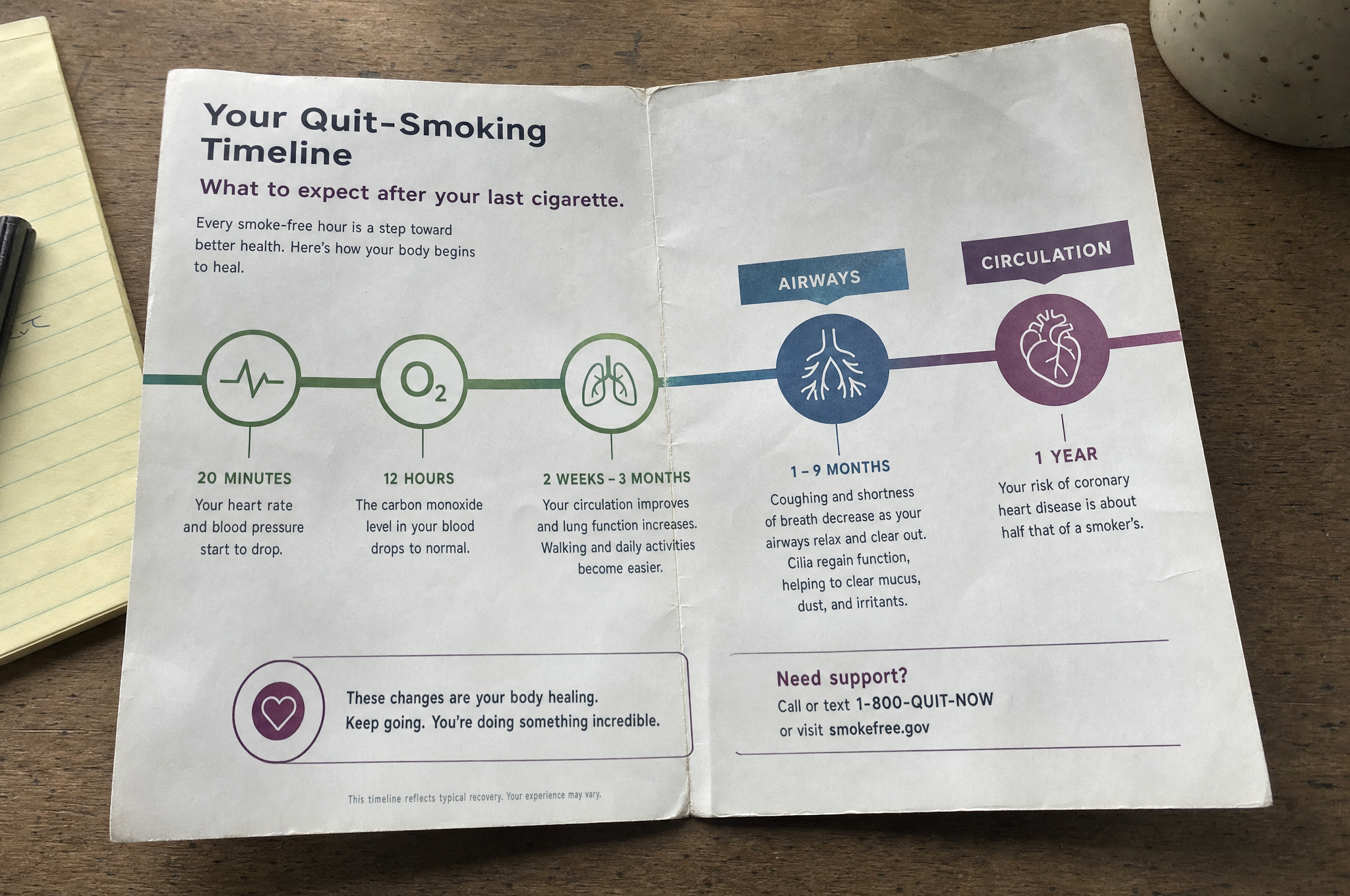
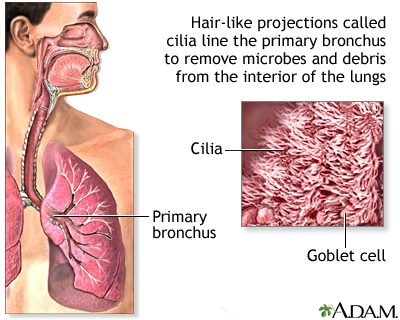
Every quit-smoking pamphlet hands you the same timeline. Twelve hours, carbon monoxide clears. Two weeks, circulation improves. Nine months, cilia regenerate. All of it true, and all of it about your airways. None of it about the muscles that move the air. Stopping was the single best thing you could do for your lungs — but stopping is a subtraction. Nothing about it rebuilds strength that was lost. That part is a separate job, and nobody hands you the instructions for it.
2
Your Cilia Healed. Your Diaphragm Didn't Get the Same Deal
Cilia are tiny and they regrow on their own. Your diaphragm is a muscle — the biggest one you never think about — and muscles don't work that way. They respond to load, and only to load. Research in people who smoke and in former smokers has repeatedly found reduced inspiratory muscle strength compared to people who never smoked. That weakness doesn't reverse itself because you put the cigarettes down. It reverses the way every other muscle weakness does: by being asked to work against something.
3
It Isn't in Your Head, and It Isn't Your Fitness Level
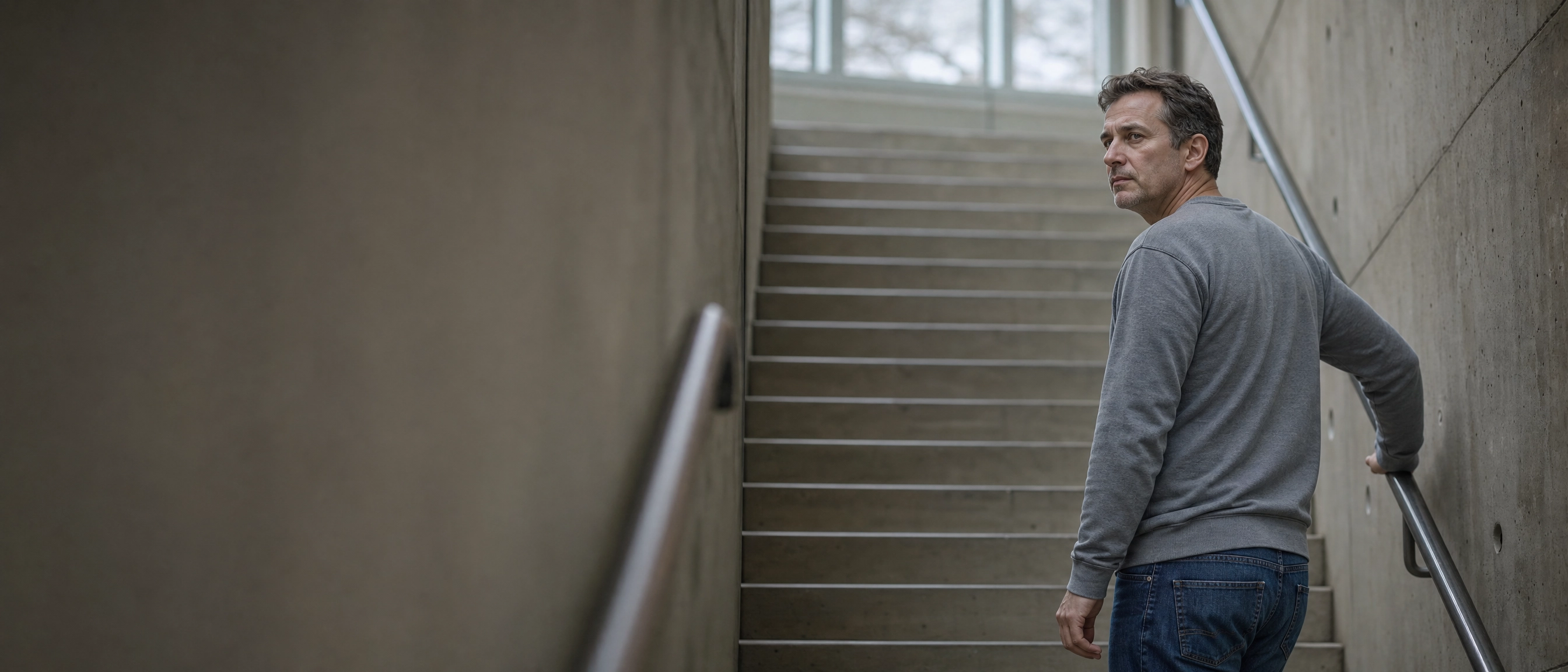
You went to the doctor. The x-ray was clear, the numbers looked acceptable, and you left with nothing to do about the thing you actually came in for. So you started wondering if you were imagining it, or if this was just what forty looks like. It isn't. Breathing hard on a short flight of stairs when your heart is fine and your scans are clean usually points at mechanics, not disease — how efficiently you're moving air, and how strong the muscles doing the moving actually are.

4
"Just Do More Cardio" Is the Worst Advice You'll Get
It's the answer everyone gives and it's backwards. Cardio is the thing you can't do yet — that's the entire problem. Telling someone who gets winded on one flight to go run is telling them to fail at the exact task that's already defeating them. I tried. I made it four minutes, came home angry, and didn't try again for six months. Resistance training for the breathing muscles works the other way around: you can do it sitting down, five minutes at a time, and it builds the capacity that makes the cardio possible later.
5
Five Minutes a Day, and a Number That Proves It
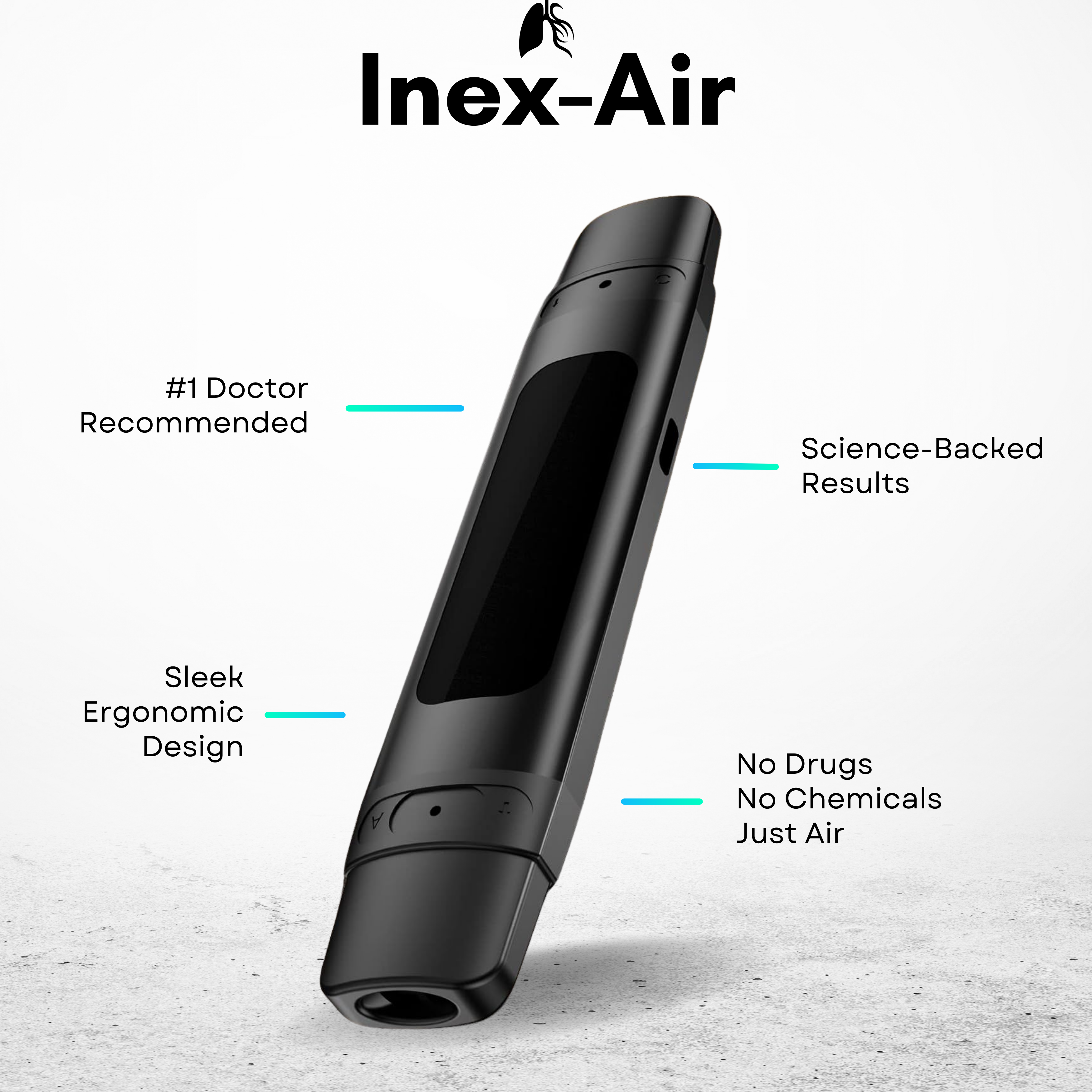
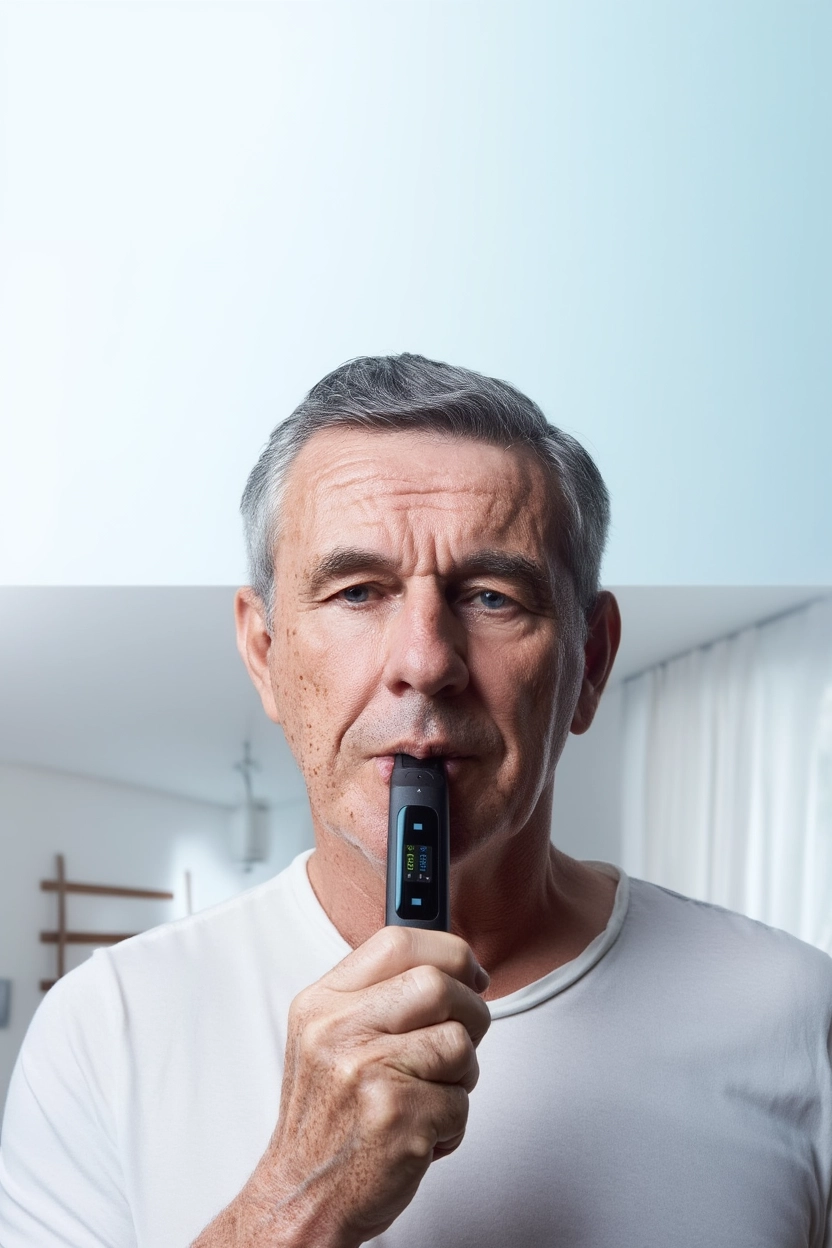
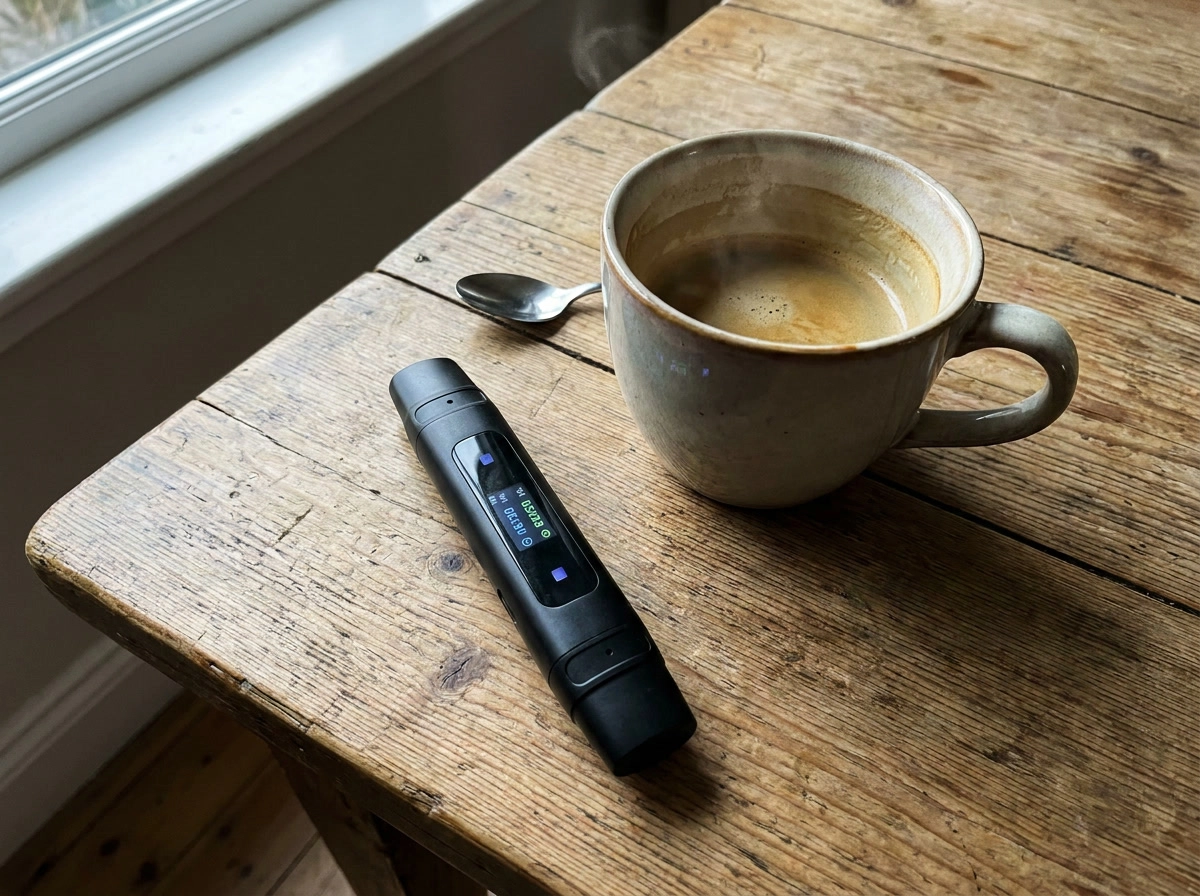
The Inex-Air™ puts adjustable resistance on every breath you take in and every breath you push out. Three difficulty levels, so it stays hard as you get stronger. And built into the same device, a digital spirometer that reads your volume in millilitres right on the screen — no app, no subscription, no wifi. That was the part that mattered to me. For two years I'd had nothing but a vague feeling that I wasn't getting better. Then I had a number, and I watched it move.
Frequently asked questions
Everything you need to know about the Inex-Air
I quit years ago. Is it too late for this to help?
No. Respiratory muscle training works on the same principle as any other resistance training — the muscle responds to load whenever you start applying it. Studies on inspiratory muscle training have found measurable strength gains in current and former smokers, in some cases larger than in people who never smoked.
How does it actually strengthen my breathing?
It uses respiratory muscle training. Breathing against adjustable resistance forces the diaphragm and intercostal muscles to work harder than they do at rest, and they adapt to that load over time — the same progressive overload principle behind any strength training.
When will I notice something?
Most people see their spirometer readings begin to move within the first two to three weeks of consistent daily use. Improvements in the 300–500 ml range over 8–12 weeks are commonly reported, though results vary from person to person.
How much time does it take?
About five minutes a day. You can do it sitting down, and it takes no more effort to fit in than brushing your teeth.
Is there an app or a subscription?
Neither. The screen is built into the device. There's nothing to download, nothing to log into, no monthly fee, and it works with no internet connection. One purchase, no ongoing costs.
What does the screen actually measure?
Respiratory volume in millilitres — how much air you moved in a single breath. Blue for exhalation, green for inhalation. It stores your last five readings so you can compare without writing anything down.
How is this different from a cheap breathing tube?
Basic tubes give you fixed resistance and no feedback. The Inex-Air has three resistance levels so it stays challenging as you get stronger, trains both inhalation and exhalation, and measures every breath so you know whether you're actually progressing.
4.6/5 based on 1,400+ reviews
You did the hard part. Now finish it.
Free shipping on orders today. Join 8,000+ people rebuilding their breathing.
30-day money-back guarantee