

Respiratory Science
Post-Smoking Recovery
8 min read
The Hidden Reason Former Smokers Stay Breathless — And the Clinical Solution Nobody Is Prescribing

Why Former Smokers Are Still Breathless Years After Quitting
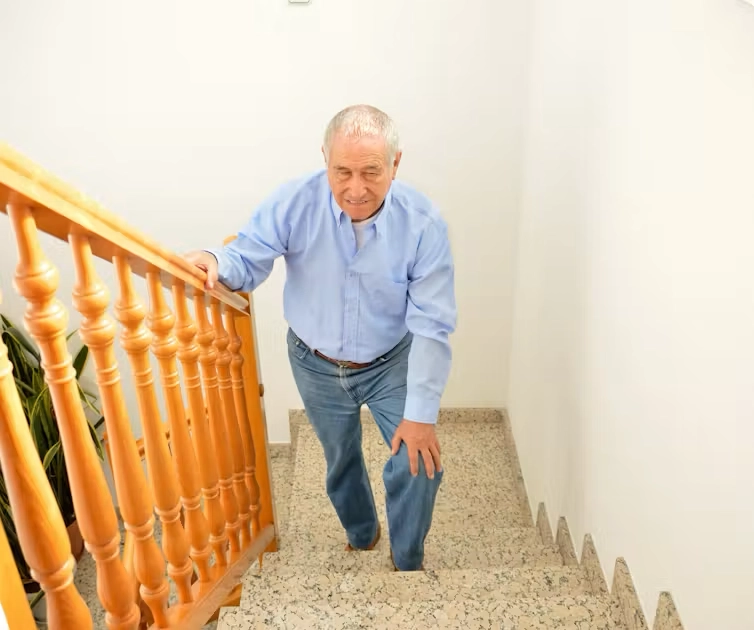
For millions of former smokers, quitting is not the end of the respiratory struggle — it is the beginning of a different and largely unaddressed one. They stop smoking, their scans come back clear, their doctors express satisfaction, and yet months or years later they remain noticeably short of breath climbing a single flight of stairs, walking briskly, or carrying groceries. The medical system classifies them as recovered. Their bodies tell a different story.
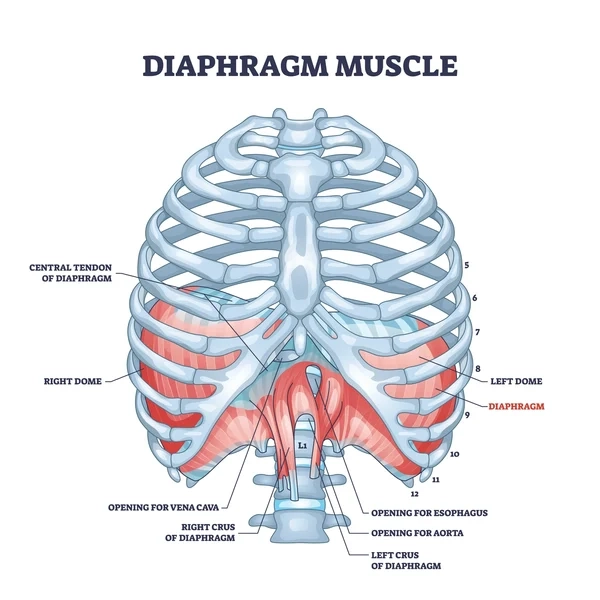
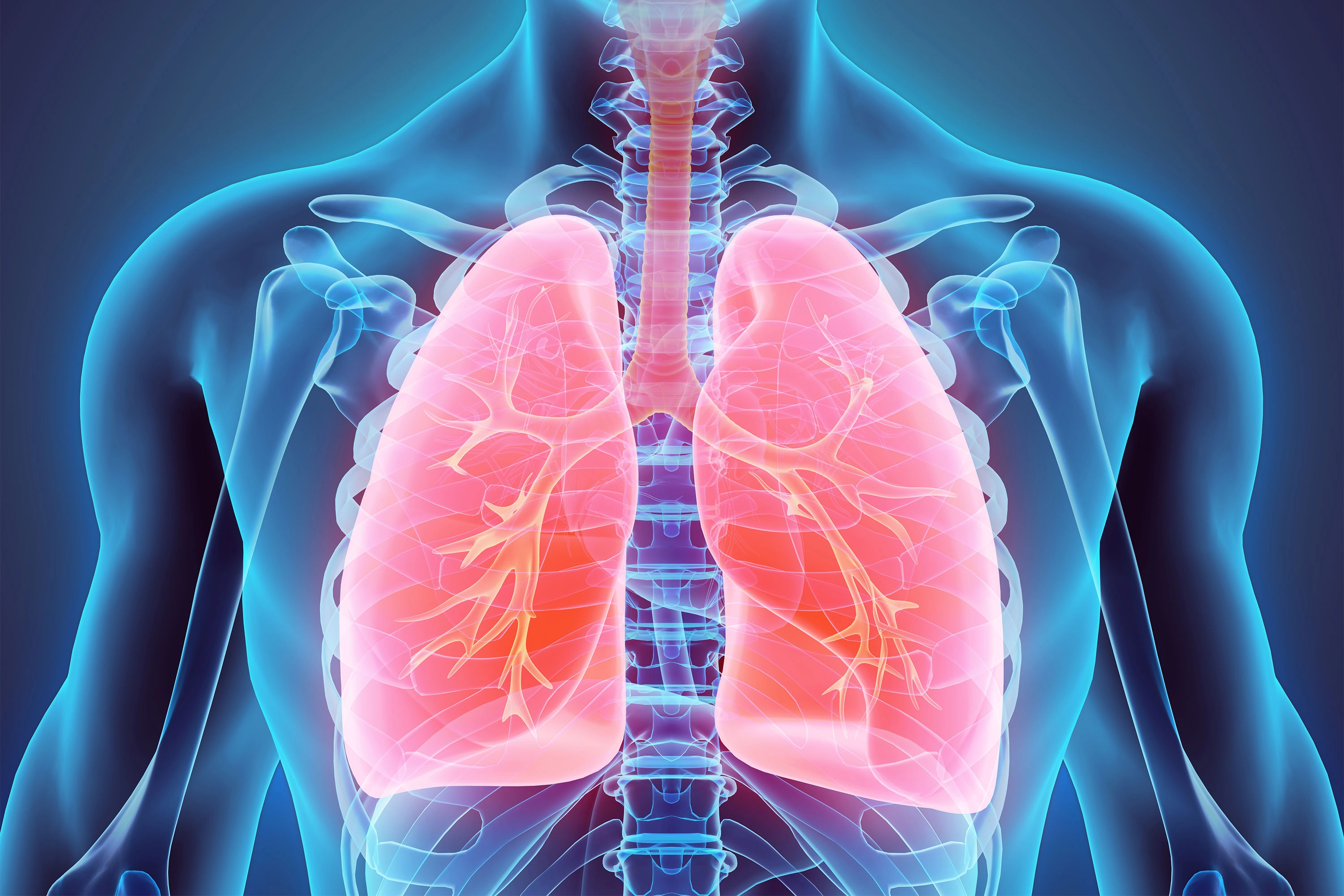
The explanation, according to a growing body of peer-reviewed research, lies not in the airways but in the muscles. Specifically, in the diaphragm — the primary muscle of respiration — and the intercostal muscles that expand and contract the chest wall with every breath. These muscles do the mechanical work of moving air into and out of the lungs. They are profoundly affected by long-term smoking in ways that standard cessation timelines and clinical checkups do not account for. And unlike airway tissue, they do not recover on their own.
The explanation, according to a growing body of peer-reviewed research, lies not in the airways but in the muscles. Specifically, in the diaphragm — the primary muscle of respiration — and the intercostal muscles that expand and contract the chest wall with every breath. These muscles do the mechanical work of moving air into and out of the lungs. They are profoundly affected by long-term smoking in ways that standard cessation timelines and clinical checkups do not account for. And unlike airway tissue, they do not recover on their own.
What the Standard Recovery Timeline Gets Wrong
The cessation recovery timeline most former smokers receive covers the following: carbon monoxide normalizes within twelve hours. Circulation improves within two weeks. Cilia begin to regenerate between one and nine months. Lung function by standard spirometry can improve up to 30 percent within the first three months. These are genuine, documented airway improvements.
What the timeline does not mention is the diaphragm.
The diaphragm is a dome-shaped skeletal muscle that sits beneath the lungs and contracts on every inhalation. Like all skeletal muscles, it responds to progressive resistance loading — it strengthens under load and weakens without it. Long-term smoking weakens the diaphragm through chronic systemic inflammation, oxidative stress on the muscle fiber, and years of altered breathing mechanics that reduce the functional demand placed on the muscle. The body compensates quietly over time until the compensation reaches its limits — which presents as disproportionate breathlessness during exertion that standard airway tests do not capture.
A clinical spirometry test measuring FEV1 and FVC evaluates how air moves through the airways. It does not evaluate the strength of the muscles doing the moving. Maximum inspiratory pressure testing, which directly measures respiratory muscle strength, is almost never performed in a routine post-cessation checkup. The weakness is real. It is simply not being looked for.
What the timeline does not mention is the diaphragm.
The diaphragm is a dome-shaped skeletal muscle that sits beneath the lungs and contracts on every inhalation. Like all skeletal muscles, it responds to progressive resistance loading — it strengthens under load and weakens without it. Long-term smoking weakens the diaphragm through chronic systemic inflammation, oxidative stress on the muscle fiber, and years of altered breathing mechanics that reduce the functional demand placed on the muscle. The body compensates quietly over time until the compensation reaches its limits — which presents as disproportionate breathlessness during exertion that standard airway tests do not capture.
A clinical spirometry test measuring FEV1 and FVC evaluates how air moves through the airways. It does not evaluate the strength of the muscles doing the moving. Maximum inspiratory pressure testing, which directly measures respiratory muscle strength, is almost never performed in a routine post-cessation checkup. The weakness is real. It is simply not being looked for.
What Four Decades of Peer-Reviewed Research Shows
The clinical category addressing this gap is called inspiratory muscle training, or IMT. The mechanism is straightforward: breathing against calibrated resistance applies a threshold load to the diaphragm and accessory respiratory muscles, subjecting them to progressive overload — the same stimulus that produces strength gains in any skeletal muscle.
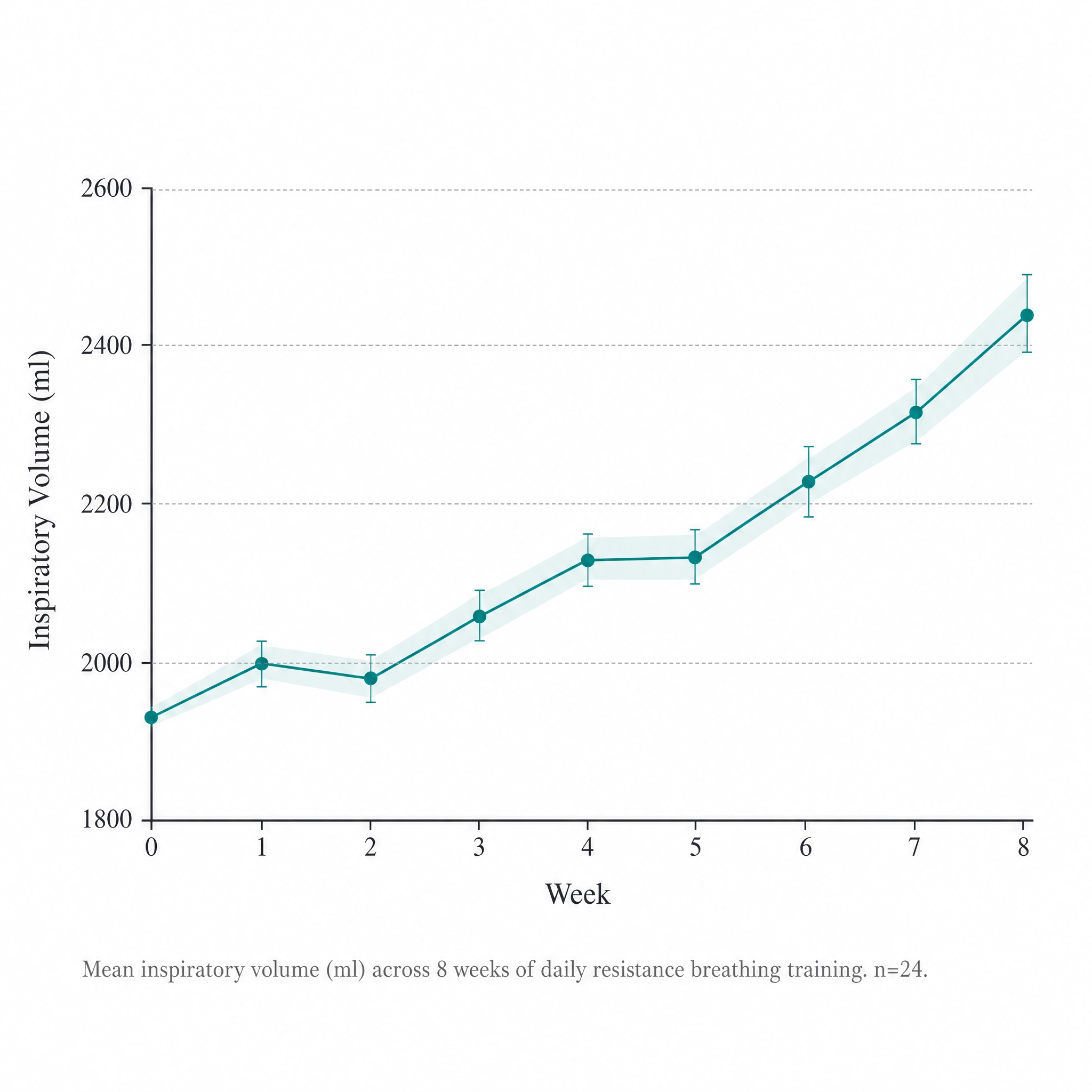
The outcomes are consistently documented across hundreds of studies. A 2019 randomized controlled trial in healthy male smokers found significant improvements in maximum inspiratory pressure, maximum expiratory pressure, forced vital capacity, forced expiratory volume in one second, maximum voluntary ventilation, slow vital capacity, and inspiratory capacity after just four weeks of IMT at 50 percent of maximum inspiratory pressure. Critically, gains were larger in smokers than in non-smokers — a finding replicated across multiple research groups. The damaged baseline responds more strongly to training stimulus, not less.
Meta-analyses of IMT protocols document consistent improvements in maximum inspiratory pressure, reduced perceived breathlessness during exertion, and improved functional exercise capacity as measured by the six-minute walk test. Pulmonary rehabilitation programs — the clinical standard for post-smoking respiratory recovery — consistently identify respiratory muscle training as among their most effective components.
Despite this, IMT is absent from every mainstream cessation product. Nicotine replacement therapy, varenicline, bupropion, digital coaching applications — none include or recommend it. The cessation industry defines success as behavioral abstinence. What happens to the respiratory musculature after cessation is outside the scope of every product on the market.
The outcomes are consistently documented across hundreds of studies. A 2019 randomized controlled trial in healthy male smokers found significant improvements in maximum inspiratory pressure, maximum expiratory pressure, forced vital capacity, forced expiratory volume in one second, maximum voluntary ventilation, slow vital capacity, and inspiratory capacity after just four weeks of IMT at 50 percent of maximum inspiratory pressure. Critically, gains were larger in smokers than in non-smokers — a finding replicated across multiple research groups. The damaged baseline responds more strongly to training stimulus, not less.
Meta-analyses of IMT protocols document consistent improvements in maximum inspiratory pressure, reduced perceived breathlessness during exertion, and improved functional exercise capacity as measured by the six-minute walk test. Pulmonary rehabilitation programs — the clinical standard for post-smoking respiratory recovery — consistently identify respiratory muscle training as among their most effective components.
Despite this, IMT is absent from every mainstream cessation product. Nicotine replacement therapy, varenicline, bupropion, digital coaching applications — none include or recommend it. The cessation industry defines success as behavioral abstinence. What happens to the respiratory musculature after cessation is outside the scope of every product on the market.
Maximum inspiratory pressure increases significantly in 4–8 weeks of consistent resistance breathing training
Forced vital capacity and FEV1 improve in smokers and former smokers with adequate resistance load
Diaphragm thickness increases with training, measurable on ultrasound imaging
Perceived breathlessness during exertion decreases as inspiratory muscle strength increases

A Device Built Around the Clinical Evidence
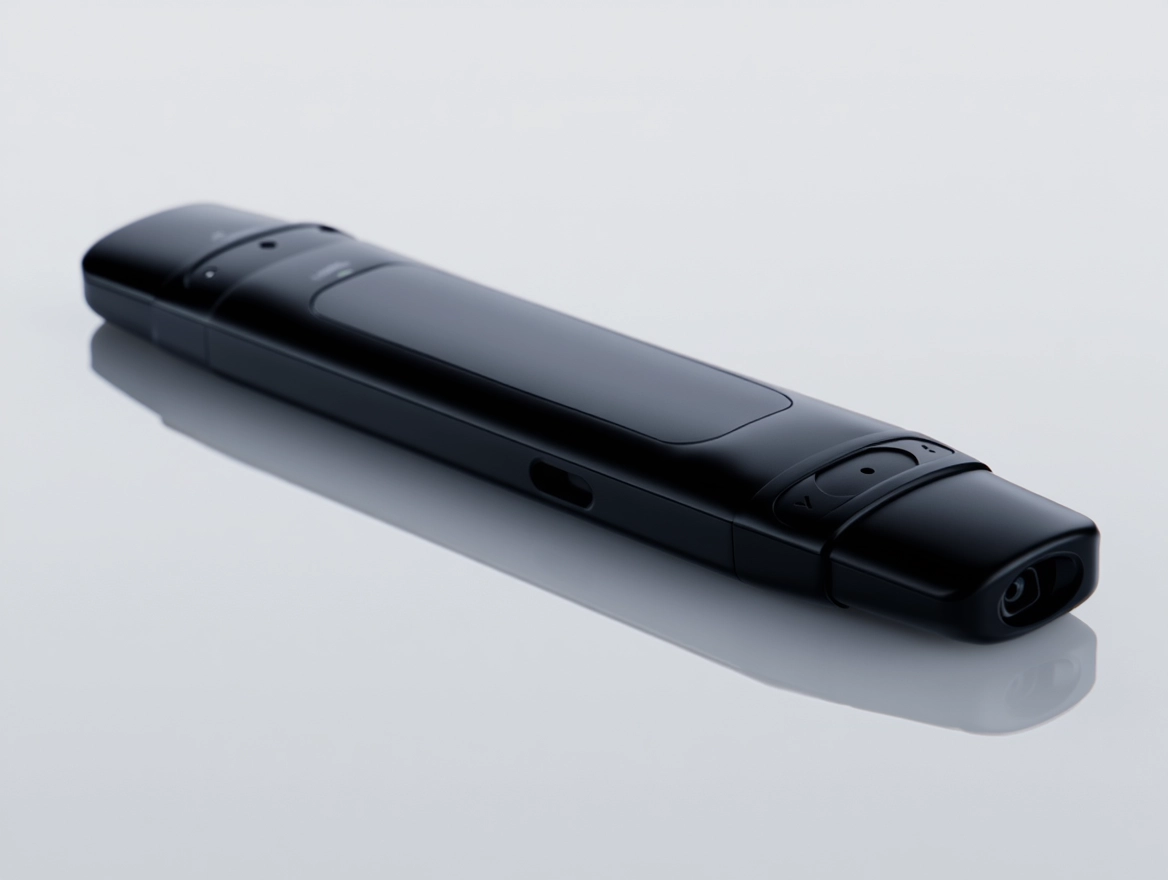
The Inex-Air™ by Breathinex delivers threshold-load inspiratory and expiratory resistance training outside a clinical setting. Three progressive resistance levels — beginner, intermediate, and advanced — allow users to apply the progressive overload principle that drives respiratory muscle adaptation.
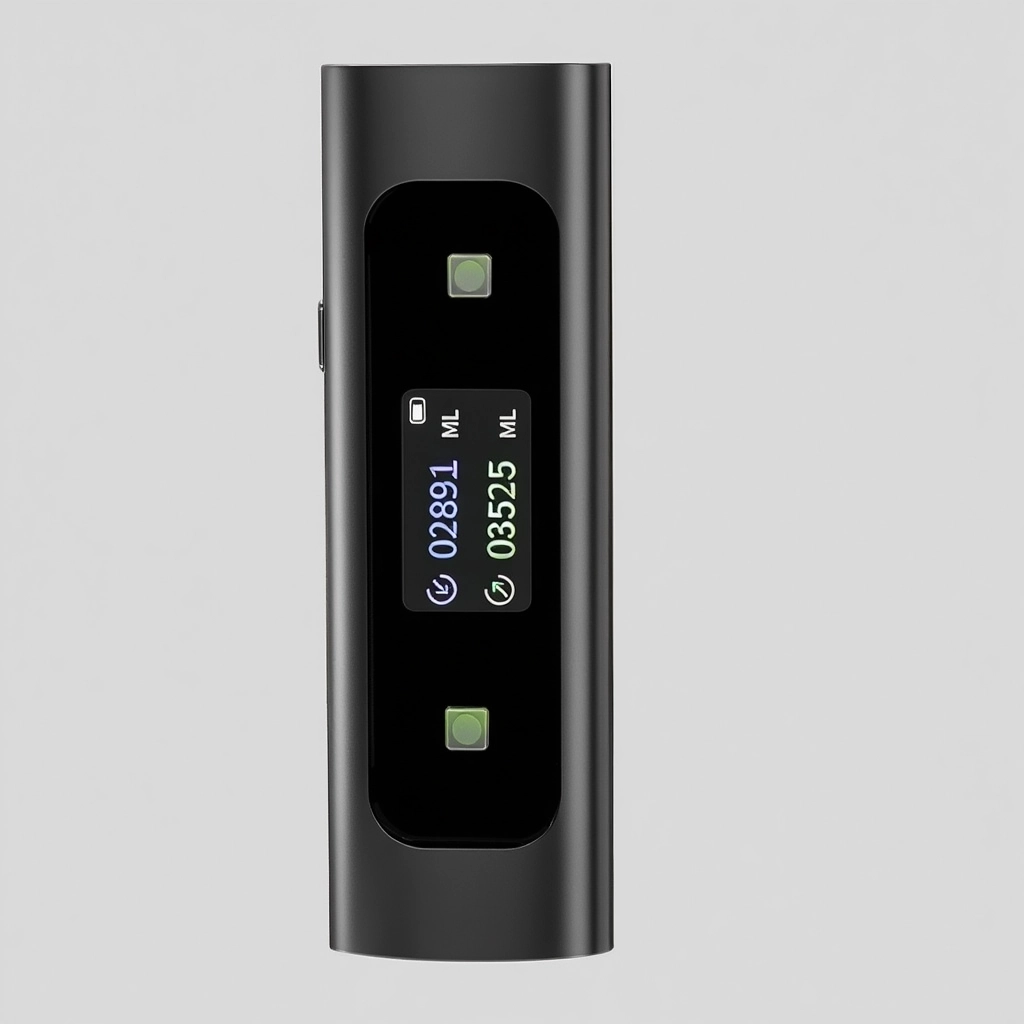
The integrated digital spirometer measures and displays respiratory volume in millilitres in real time after every breath, addressing the primary reason self-administered breathing training fails: absence of objective feedback. Without a number, there is no way to confirm whether training load is adequate, whether adaptation is occurring, or whether progress is being made. The spirometer converts a subjective practice into a measurable, trackable intervention.
The device stores the last five readings for session comparison, requires no application or subscription, is USB-C rechargeable with up to six months of battery life, and is constructed from medical-grade BPA-free materials.
Typical users who train consistently report volume improvements of 300 to 500 millilitres over eight to twelve weeks — improvements visible on the device screen after every session and consistent with gains documented in clinical IMT research. At $245 as a one-time purchase with no consumables or refills, it represents a fraction of the cost of a single pulmonary rehabilitation program, which typically runs $150 to $300 per session before equipment and follow-up costs.
The integrated digital spirometer measures and displays respiratory volume in millilitres in real time after every breath, addressing the primary reason self-administered breathing training fails: absence of objective feedback. Without a number, there is no way to confirm whether training load is adequate, whether adaptation is occurring, or whether progress is being made. The spirometer converts a subjective practice into a measurable, trackable intervention.
The device stores the last five readings for session comparison, requires no application or subscription, is USB-C rechargeable with up to six months of battery life, and is constructed from medical-grade BPA-free materials.
Typical users who train consistently report volume improvements of 300 to 500 millilitres over eight to twelve weeks — improvements visible on the device screen after every session and consistent with gains documented in clinical IMT research. At $245 as a one-time purchase with no consumables or refills, it represents a fraction of the cost of a single pulmonary rehabilitation program, which typically runs $150 to $300 per session before equipment and follow-up costs.




1
Measurable progress you can see on screen
The Inex-Air uses precision resistance technology to challenge your diaphragm and intercostal muscles. By forcing your body to work harder for every breath, you naturally expand your lung capacity. The digital screen provides immediate feedback, turning a difficult recovery process into a measurable game that you can actually win every single day.
2
Eliminate the guesswork of lung recovery
Most people who try to quit struggle because they have no physical way to track their recovery. Inex-Air changes that by measuring your inhalation volume in milliliters. Watching that number climb from 1500 to 3000 over 8 to 12 weeks provides a powerful psychological boost that keeps you committed when things get difficult.

3
A portable and natural solution for life
This device is completely drug free and relies on the principles of resistance training used by elite athletes. There are no side effects, no nicotine, and no expensive refills required. It fits easily in your pocket, allowing you to perform your five minute strength training sessions whether you are at home, at work, or traveling.
Take back control of every breath
Inex-Air provides the physical feedback and strength training needed to move past the struggle of quitting for good.
Digital mL tracking for real time progress
Adjustable resistance levels for every fitness stage
No recurring costs or expensive monthly refills


Real stories from former smokers
Thousands have used Inex-Air to visualize their progress and build stronger lungs naturally.